Snake Plant (Dracaena trifasciata)
Snake Plant Plant Features
If you are looking for an easy-care houseplant, you can’t do much better than a snake plant. Generations of gardeners have called it a favorite because of how adaptable it is to a wide range of growing conditions and it is still one of the most popular houseplants around today. Costa Farms has grown it on over 5,200 acres alongside more than 1,500 other varieties, and it remains a consistent bestseller for good reason.
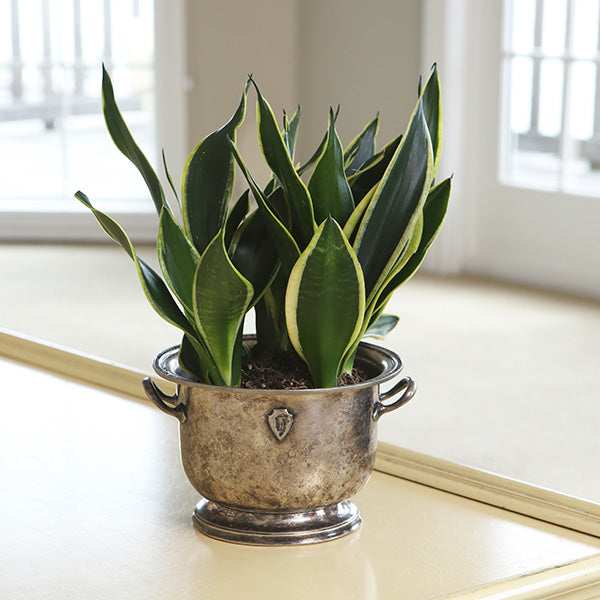
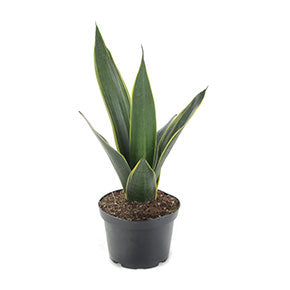
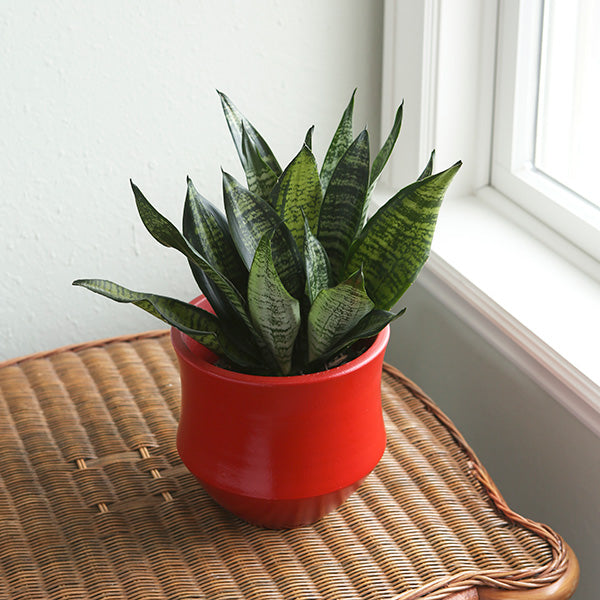
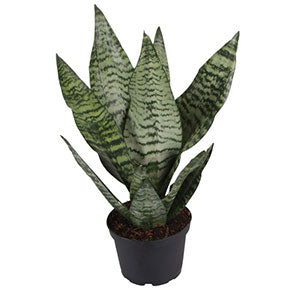
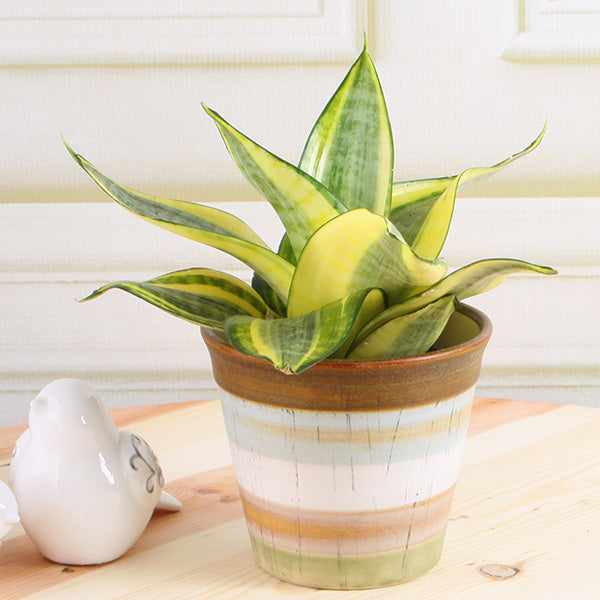
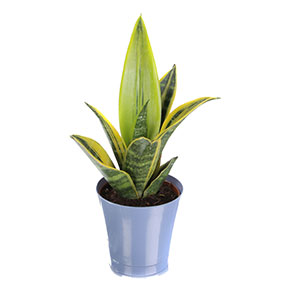
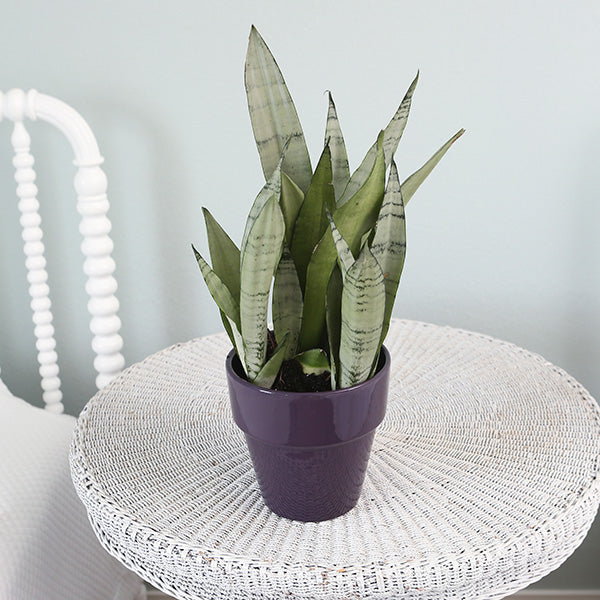
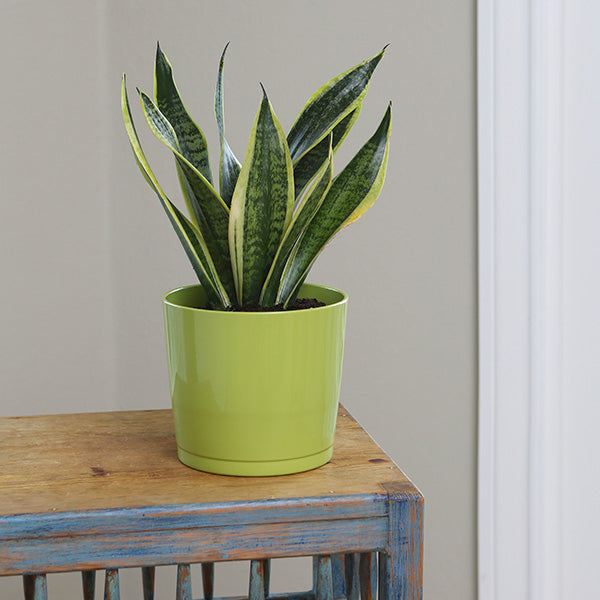
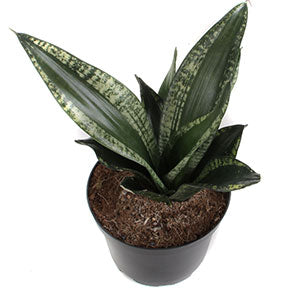
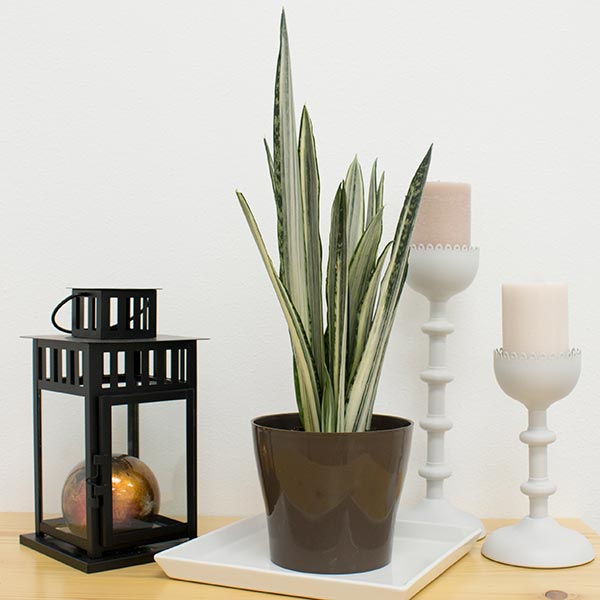
Most snake plant varieties have stiff, upright, sword-like leaves that may be banded or edged in gray, silver, or gold. That architectural quality makes it a natural choice for modern and contemporary interiors, and equally at home in any room that simply needs a plant that works without fuss.
Snake plant tolerates low light, forgives irregular watering, and asks for very little in return. Whether you are a first-time plant parent or an experienced grower adding to a collection, it delivers.
Fun Fact
Botanists have reclassified snake plants from Sansevieria to Dracaena. It is now scientifically known as Dracaena trifasciata, though most plant parents and most garden centers still call it Sansevieria. Both names refer to the same plant.
Note: Snake plants can be invasive when planted outdoors in some frost-free areas. Check local restrictions before adding it to an outdoor landscape.
Buy Snake Plant
Buy it online and have it shipped fresh from our farm, direct to your door from our online plant shop. Or find it online or at your favorite local garden center from one of our retailer partners.
Snake Plant Growing Instructions
How to Care for Snake Plant
Snake plant (Dracaena trifasciata) is one of the most forgiving houseplants around. It handles a wide range of conditions, bounces back from neglect, and stays handsome with almost no effort. Here is what it needs to thrive.
Light
Snake plant tolerates low light better than most houseplants, but it grows fastest and looks its best in bright light. A spot near a window with filtered sun is ideal. Direct sun for long stretches can scorch the leaves if your plant isn’t used to it, so avoid placing it against a south-facing window unless you’ve acclimated it or use a sheer curtain to soften the sun.
Watering
If your snake plant comes in a Wick & Grow® planter, the self-watering system takes the guesswork out of watering; the Waterwick® draws moisture up from the reservoir as the plant needs it, which prevents over- or underwatering. Refill the reservoir when it runs low and you are done.
If you water it traditionally, wait until at least the top inch of potting mix dries out completely before watering again. Snake plants are known for their drought tolerance and are far more likely to suffer from overwatering than underwatering, so err on the side of dry.
Humidity
Snake plant is comfortable at normal household humidity levels (30 to 50 percent relative humidity) and does not require misting or a humidifier. It handles dry indoor air; a common issue in heated or air-conditioned rooms; without complaint.
Pruning
Snake plants rarely need pruning. It is a slow grower and will not become unruly under normal indoor conditions. If a leaf is damaged, yellowing, or has brown tips that bother you, cut it off at the base using clean, sharp scissors or a knife. That is all the pruning this plant will ever ask for.
Tip
Keep the foliage looking sharp and the plant performing well by wiping the leaves with a damp cloth every few weeks. This practice removes accumulated dust from the broad, flat surfaces of the snake plant, which otherwise reduces the efficiency with which the plant absorbs light.
-

Water
Low water needs
-

Light
Indoors: High light
Indoors: Low light
Indoors: Medium light
-

Colors
Green
Variegated
-

Special Features
Purifies the air
Super-easy to grow


Complement your Snake Plant
CalatheaSnake plant is a natural with calathea; its texture and fun color looks beautiful paired with variegated calathea varieties.
Fern, Houseplant
Contrast ferns' soft foliage with the stiff structure of snake plant.
Colorful Aglaonema
Red aglaonema offers colorful foliage that looks stunning with any snake plant (especially silvery varieties such as Moonshine snake plant).
Q&A
How often should you water a snake plant?Water snake plants when the top inch or two of potting mix is completely dry. In most homes that means watering every two weeks or so, depending on light levels and the season. If your plant is in a Wick & Grow® planter, the system manages moisture automatically refill the reservoir when it runs low. If you water it traditionally, less is more: snake plants tolerate underwatering far better than overwatering.
Can snake plant grow in low light?
Yes. Snake plant tolerates low light better than most houseplants, which makes it one of the few plants that genuinely survives in darker corners or offices with limited natural light. It grows faster and produces more pronounced leaf markings in bright indirect light, but low light will not harm it.
Is snake plant toxic to pets?
Yes. Snake plant is toxic to cats and dogs if ingested. It contains saponins, which can cause nausea, vomiting, and diarrhea in pets. Keep it out of reach of animals that chew on plants, or choose a pet-safe alternative.
How big does a snake plant get?
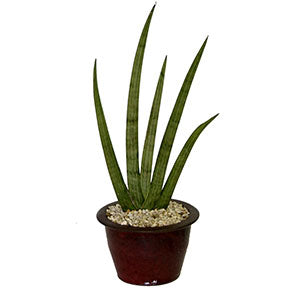
Size depends on the variety. Standard types like Black Gold and Black Robusta reach 2 to 4 feet tall indoors. Dwarf varieties like Gold Hahnii and Whitney stay compact at 6 to 10 inches. Cylindrica grows upright round stems that can reach 4 feet. Most snake plant varieties are slow growers, so whatever size you bring home stays manageable for years.
Does the snake plant need fertilizer?
Snake plant grows well without regular fertilizing, but it responds to a light feeding in spring and summer. Use any balanced houseplant fertilizer at half the recommended dose once or twice during the growing season. Avoid fertilizing in fall and winter when growth slows. Over-fertilizing can produce soft, floppy growth the opposite of snake plant’s characteristic stiff structure.