A yellow leaf can mean a dozen different things — potting mix that's stayed wet too long, dryness, the wrong amount of light, a temperature swing, pests, a nutrient hiccup, or just an older leaf reaching the end of its life. That's the tricky part: the leaf itself won't tell you which one it is. Start with the potting mix, take note of which leaves are affected, and check for any other symptoms before deciding what to do next.
The good news? A few quick observations are usually all it takes to narrow things down.

As Costa Farms' horticulturist Justin Hancock puts it in The New Complete Guide to Houseplants: "Yellowing is kind of like the stomachache of the houseplant world — it's one symptom, but it can stem from a dozen different issues."
What Should You Check When a Houseplant Develops Yellow Leaves?
Before you reach for the watering can, the fertilizer, or the pruning shears, take a beat. Watering, feeding, repotting, or moving the plant right away can actually make it harder to figure out what's really going on.
1. Check the Potting Mix
Sink a finger below the surface — is it wet, evenly moist, or dry? And just as important, how long has it been that way?
Potting mix that's stayed wet for a while can leave roots gasping for oxygen. Mix that's stayed dry too long can leave the plant unable to pull up enough water to keep its leaves going. Either way, make sure the container is actually draining, and check the saucer or outer pot for water that's been sitting there quietly.
If you discover it is time to repot:
Here is a helpful blog about repotting houseplants.
Here is a helpful video about repotting houseplants.
2. Look at Which Leaves Are Turning Yellow
Where the yellowing shows up — and how much of it there is — tells you almost as much as the color itself:
- One older leaf near the bottom? It may simply be natural aging.
- Several yellow leaves lower down? Could point to moisture, light, roots, or nutrients.
- Yellowing in new growth? Worth a closer look.
- Yellowing all over the plant? Something about its overall environment may need attention.
- Yellowing on just one side? Check what's nearby — a window, a vent, anything that could be affecting just that side.
None of these patterns hand you a diagnosis outright, but they're a good place to start narrowing things down.

In Photo: Not all yellowing is a problem — plants naturally shed older leaves as they age, redirecting energy to new growth. If it's just one or two lower or older leaves fading while the rest of the plant looks healthy, it's likely just the plant letting go of what it no longer needs.
3. Look for Other Symptoms
Yellow leaves rarely travel alone. Take a look at the leaves, stems, and surrounding growth for anything else that seems off:
- Tissue that's gone soft, limp, dry, or crispy
- Roots that look brown, black, or broken down
- Stems that feel soft or discolored
- Spots or damaged patches
- Webbing or a sticky residue
- Insects you can actually see
- A smell coming from the potting mix that shouldn't be there
Put together, these clues tell you a lot more than a yellow leaf on its own ever could.
Is My Houseplant Turning Yellow Because the Potting Mix is Too Wet?
Yellow leaves are often the first sign that a plant's roots have been sitting in wet potting mix longer than they can handle. It happens more than you'd think — a container without good drainage, a saucer that never gets emptied, or just a plant that's simply not using water as fast as it's being given.
Along with yellowing, you might notice leaves that feel soft or limp, leaf drop, potting mix that stays damp no matter how long you wait, or water pooling in the saucer.
Don't judge moisture by looks alone — a dry-looking surface can be hiding a soggy root ball underneath. If the mix stays wet and the plant keeps declining, it's worth checking the roots themselves. Healthy roots are firm; roots that feel soft, mushy, or have turned brown or black mean the root system has taken damage.
From here, let the potting mix dry out to whatever level that particular plant prefers before watering again, and make sure any standing water has somewhere to go.
Going forward, the calendar isn't a reliable guide for when to water. Check the potting mix itself before you water — temperature, light, humidity, and the season all change how fast a plant drinks.

In Photo: The yellow halo around the brown patches is a sign of infection — when overwatering leads to root rot, bacteria or fungi can take hold in the damaged tissue, and the yellow ring is the leaf's response to that infection spreading, rather than a leaf simply getting old and preparing to drop.
Can a Houseplant Develop Yellow Leaves Because It Is Too Dry?
On the flip side, potting mix that's been dry for too long can just as easily turn leaves yellow. When the roots can't pull up enough moisture, the plant will sometimes sacrifice a leaf or two to keep the rest of itself going.
A plant that's been too dry for a while often shows more than yellow leaves — wilting, curling, thinning foliage, or a pot that feels surprisingly light. The potting mix itself may feel dry well below the surface, not just at the top. Water thoroughly, soaking the whole root ball, then let the excess drain away. If you notice water running straight through the pot or pooling on top instead of soaking in, the potting mix may have gone hydrophobic — a fancy way of saying it's actually repelling water instead of absorbing it. This happens more often than many expect once a mix dries out completely.
To fix hydrophobic mix, set the grower pot in a shallow container of water and let the root ball soak for several minutes, then let it drain fully. If the pot's too big to soak, add water slowly in a few passes, giving the mix time to absorb between each one.
Once it's rehydrated, keep an eye on it — the goal is to water again before the mix gets so dry it starts repelling water, while still letting it dry to the level that particular plant likes.

In Photo: Underwatering often causes leaves to yellow gradually before drying out and curling at the edges — a papery, crispy texture that's different from the soft, water-soaked patches typical of overwatering.
When Should You Water Popular Houseplants?
| Water the Potting Mix when... | Popular Houseplants |
| the surface dries | Peace lilies, ferns, calathea, palms, fittonia |
| the top 25% dries | Pothos, philodendron, monstera, ivy, money tree, lipstick plant, scindapsus, alocasia |
| the top 50% | Dracaena, aglaonema, dieffenbachia, ficus, fiddle leaf fig, bird's nest fern, rubber tree |
| the top 65% dries | Hoya, peperomia, ponytail palm |
| the top 75% dries | Yucca cane, snake plant, zz plant, bromeliad |
| almost all of the potting mix dries | Aloe, succulents, phalaenopsis orchid, cactus |
These are starting points, not a watering schedule. Pot size, potting mix, light, temperature, humidity, season, and the type of container all affect how quickly a plant uses moisture. Always check the potting mix before watering.
Can the Amount of Light Turn Houseplant Leaves Yellow?
Light is a bit of a balancing act — too little and too much can both leave a plant with yellow leaves.
How Can You Tell If a Houseplant Needs More Light?
A plant that isn't getting enough light often looks a little pale or weak before the yellowing even shows up. You might also notice the potting mix staying wet longer than usual, simply because the plant is growing more slowly and using less water.
Move it closer to a light source suited to that particular plant, and if it's been in a dim spot a while, ease it into brighter conditions gradually rather than all at once.
How Can You Tell if the Light Is Too Intense?
Too much light shows up differently — leaves may fade, yellow, or develop damaged patches, often concentrated on whichever side faces the window.
Give it some distance from the window or filter the light, and check what that specific plant actually prefers rather than assuming every houseplant wants the same amount of sun.
How Much Light Do Popular Houseplants Need?
| Light Level | Popular Houseplants |
| Tolerates lower light | Snake plant, ZZ plant, aglaonema, pothos |
| Medium to bright indirect light | Peace lily, bird's nest fern, philodendron, dracaena, parlor palm |
| Bright indirect light | Monstera, money tree, ficus, fiddle leaf fig, hoya, |
| Bright light | Yucca cane, croton, aloe, cacti, and many succulents |
Many houseplants can adapt to a range of light levels, but they may grow more slowly, use less water, or lose some color or fullness in lower light. When moving a plant into much brighter light, make the change gradually to help prevent leaf damage.
Learn more about houseplants and light.
Is the Plant Adjusting to a New Location?
Bringing a plant home, moving it to a different room, or even just shifting it a few feet from a window can trigger some yellowing, even if the new spot looks perfectly fine to you. Plants notice changes in light, temperature, humidity, and how quickly they're using water — and dropping an older leaf or two is sometimes just how they cope with the adjustment.
If the rest of the plant still looks healthy and the yellowing tapers off on its own, it's probably just settling in. One thing to avoid: piling on more changes while it's adjusting. Repotting, fertilizing, and overhauling the watering routine all at once makes it much harder to tell what's actually helping — or making things worse.
If the yellowing keeps going, spreads, or starts showing up in new growth, that's your cue to look for another cause.

Are Older Yellow Leaves a Normal Part of Plant Growth?
Every plant sheds leaves eventually, and it's usually nothing to worry about. If you notice one older leaf near the bottom turning yellow while the rest of the plant looks healthy, that's often just age catching up with it — lower leaves get less light as new growth fills in above them, and some plants naturally let go of older foliage as their stems mature.
The line between normal and "something's off" comes down to scale. One leaf here and there is likely just part of a plant's life cycle. Several leaves turning at once, yellowing that spreads quickly, or new growth getting affected — that's when it's worth looking closer at what else might be going on.
Can Pests Cause Yellow Leaves on Houseplants?
Sometimes the cause isn't water or light at all — it's something feeding on the plant. Spider mites, aphids, scale, and mealybugs all pierce leaf tissue for sap as they feed, and the result is often pale, speckled, faded, or yellowing foliage, along with distorted growth or leaves dropping earlier than they should.
Flip the leaves over and take a look at the undersides, new growth, and the points where leaves meet stems — that's where most pests like to hide. You're looking for:
- Fine webbing
- Sticky residue
- Small bumps on leaves or stems
- White, cottony clusters
- Pale or yellow speckling
- The insects themselves, if you look closely enough
If you spot any of this, it's worth moving the plant away from your other houseplants for the time being and giving its neighbors a once-over too. Pests can be tricky to tell apart, so identify what you're dealing with before reaching for a treatment, and follow the label directions once you do.

In Photo: This fine webbing along the leaf's edge is a sign of spider mites — as they feed by piercing individual leaf cells, they cause the yellow speckling that can spread into larger yellowed patches as an infestation grows.
Learn more about pests on houseplants.
Can Temperature Changes Cause Yellow Leaves?
Houseplants are creatures of habit, and a lot of them don't love surprises — especially when it comes to temperature. A plant parked near a heating or cooling vent, next to a door that's constantly opening, or pressed up against a window on a very hot or very cold day can start showing yellow leaves as its way of saying it's stressed.
Think back to whether the plant was recently moved, or whether the room itself has shifted with the season — the spot that worked fine in spring might be sitting in a draft come winter. Once you've spotted the culprit, move the plant away from the vent, door, or glass, while still keeping it somewhere it can get the light it needs.
If your plant arrived by mail, temperature is also worth a second look. Extreme heat or cold during shipping can stress a plant even when the box was well-insulated, and that stress doesn't always show up right away — yellowing from a rough shipping temperature can appear anywhere from a few days to a couple of weeks after you unbox it. If a new plant starts yellowing shortly after arrival, shipping stress is worth ruling out alongside the other causes on this page.
Do Yellow Leaves Means a Houseplant Needs Fertilizer?
Not necessarily — and reaching for fertilizer as a first response can sometimes do more harm than good. Yellowing can point to a nutrient issue, but the same symptom shows up with moisture problems, root damage, or the wrong amount of light, so it's worth ruling those out first.
Before fertilizing, take stock of the potting mix, drainage, roots, and available light, and think about how long it's been since the plant was last fed or repotted. If everything else checks out and the plant is actively growing, a fertilizer made for houseplants, used according to the label, is a reasonable next step.
One thing to resist: Upping the fertilizer just because a leaf turned yellow. More fertilizer won't fix unhealthy roots or a bad growing spot — and too much can make things worse.
Learn more about fertilizing houseplants.
When Could Yellow Leaves Indicate a More Serious Problem?
Most of the time, yellow leaves are just a sign that something in the plant's care needs a small adjustment — not that anything is seriously wrong. But it's worth paying closer attention if yellowing shows up alongside:
- Soft or discolored stems
- Brown, black, or mushy roots
- An odor coming from the potting mix that shouldn't be there
- Spots or damaged patches that keep spreading
- Leaves dropping quickly or in large numbers
- No improvement even after you've corrected what seemed like the obvious problem
Because yellowing is such a general symptom, more than one thing can be going on at once. Rather than fixating on the yellow leaf itself, it helps to step back and look at the plant's whole environment — water, light, roots, and everything in between.
Yellow Houseplant Leaves: Quick Troubleshooting Guide
| What you notice: | What it may indicate: | What to check first: |
| Wet potting mix and soft yellow leaves | The root zone may be remaining wet too long | Drainage, standing water, available light, and root condition |
| Dry potting mix with limp or crispy leaves | The plant may have remained dry too long | Moisture throughout the root ball |
| One older lower leaf turns yellow | The leaf may be aging naturally | Whether the rest of the plant appears healthy |
| Yellow leaves appear after the plant is moved | The plant may be adjusting to a new environment | Changes in light, temperature, and moisture |
| Yellowing appears with webbing or sticky residue | Pests may be feeding on the plant | Leaf undersides, new growth, and stem joints |
| Yellowing appears with soft stems or damaged roots | The plant may have advanced root stress | Potting mix, drainage, roots, and odor |
These clues can help narrow down the possibilities, but more than one condition may be contributing to the yellow leaves.
Should You Remove Yellow Leaves from a Houseplant?
If the look of a yellow leaf bothers you, go ahead and remove it with a clean, sharp blade or pair of pruners, being careful not to nick nearby stems or healthy growth.
If a leaf is only partly yellow, there's no rush. As long as most of it still looks healthy, you can leave it be. And if a plant is already stressed, resist the urge to strip off a lot of foliage at once — that can set it back further rather than help.
If more leaves keep turning, it's still worth digging into moisture, light, temperature, roots, and everything else that could be behind it.
Learn more about pruning houseplants.
How Can You Help Prevent Yellow Leaves?
An occasional yellow leaf is just part of owning a houseplant. But a little consistency in how you care for it goes a long way toward keeping yellowing to a minimum:
- Get to know the moisture and light preferences of that specific plant.
- Check the potting mix before you water instead of watering on a set schedule.
- Make sure excess water actually has somewhere to drain.
- Empty saucers and outer pots instead of letting water sit.
- Take a look at leaves, stems, and new growth now and then for early signs of pests.
- Ease into changes in light or temperature rather than making them abruptly.
- Fertilize based on what the plant actually needs and the label's directions.
- Revisit your plant's care as the seasons change — what worked in summer may not work in winter.

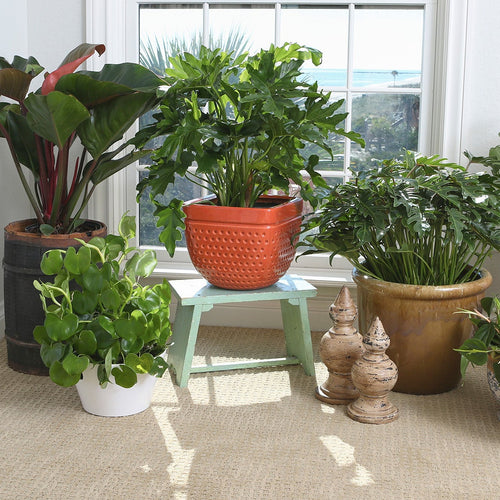
In photo: A little yellowing here and there is normal — but a room full of vibrant, healthy foliage like this is the goal. Here's how to tell the difference between a plant that's just fine and one that needs your attention.
Frequently Asked Questions
Why Are the Bottom Leaves on My Houseplant Turning Yellow?
Most of the time, this is just age — lower leaves get less light once new growth fills in above them, and it's normal for a houseplant to shed the occasional older leaf as it grows. If several bottom leaves turn yellow all at once, though, it's worth checking the potting mix, drainage, light, roots, and when you last fertilized. Widespread yellowing is less likely to be simple aging.
How Can I Tell Whether Yellow Leaves Are Caused by Too Much or Too Little Water?
Start by checking the potting mix, but consider the condition of the leaves and roots as well. Soft, yellowing leaves paired with wet mix usually point to the roots sitting in too much moisture. Wilted, curling, or crispy leaves with dry mix point the other way. Since the symptoms can look similar on the surface, also check the container's drainage and think about how long the mix has actually been wet or dry.
Can a Yellow Houseplant Leaf Turn Green Again?
No — once a leaf has fully yellowed, it's lost the chlorophyll that made it green, and there's no getting that back. A leaf that's only partially yellow may still have some life left in it, but the real priority is fixing whatever's causing the yellowing in the first place. New, healthy growth and yellowing that's stopped spreading are much better signs of recovery than watching an already-yellow leaf for change.
Should I Cut Yellow Leaves Off My Houseplant?
You can, if it bothers you. Remove a fully yellow leaf with a clean, sharp blade or pair of pruners, cutting carefully near the base without damaging the stem or nearby growth. Just don’t go overboard removing foliage from a plant that is already stressed. Keep in mind, though, that cutting off the leaf won’t fix whatever caused the yellowing in the first place.
Why Are the New Leaves on My Houseplant Turning Yellow?
This one's worth a closer look, since it's less likely to be simple aging. New growth turning yellow can point to root problems, moisture or light that isn't quite right, nutrient issues, or pests. Before reaching for fertilizer or changing several things at once, check the potting mix, root condition, and anything you've recently changed about the plant's care.
Make One Change at a Time
Once you've identified the likely cause, make one change — not several. Adjust watering, move the plant, or treat pests, then give it some time before judging results or making another change. Changing everything at once makes it hard to know what worked. A fully yellow leaf won't turn green again, but new, healthy growth is the best sign your plant is recovering. Still not sure what's going on? Use the Costa Farms Plant Finder to check your plant's specific light and moisture needs. Or reach out to Costa Farms Customer Service at: info@costafarms.com.
For more on diagnosing yellow leaves and other common houseplant issues, explore Justin Hancock's The New Complete Guide to Houseplants, where he covers this and other symptoms in detail.